 Pin it
 I used to think tomato soup came exclusively from a red and white can until a rainy Tuesday in a cramped studio apartment changed everything. My neighbor brought over a tray of blistered tomatoes and the smell of roasting garlic filled the entire hallway. That afternoon taught me that true comfort is not just heated up but built from scratch in a hot oven. It was the first time I realized how sweetness can be coaxed out of a simple vegetable with enough heat. Now this soup is my rainy day ritual.
One summer the garden gave us more tomatoes than we could ever eat before they turned soft. I spent the whole Saturday afternoon roasting batch after batch while the radio played in the background. My hands were stained with tomato juice and the kitchen was steaming but the result was pure liquid gold. Sharing those jars with friends felt like giving them a piece of the summer sun. It remains the most requested recipe in my family circle.
Ingredients
- Ripe Tomatoes: Look for the ones that feel heavy for their size because they hold the most juice for the broth.
- Yellow Onion: Quartering these allows the outer layers to char slightly while the insides become soft and sweet.
- Garlic Cloves: Roasting them whole tucked under the tomatoes prevents them from turning bitter.
- Extra Virgin Olive Oil: A generous drizzle ensures the vegetables roast evenly and adds a silky mouthfeel to the final blend.
- Vegetable Broth: Use a low sodium version so you have total control over the final saltiness of your soup.
- Fresh Basil Leaves: Adding these after roasting preserves their delicate oils and that signature peppery aroma.
- Unsalted Butter: Dropping a cold knob into the hot puree adds a professional restaurant finish.
- Sugar: A tiny pinch acts as a secret weapon to balance out the natural acidity of the tomatoes.
Tired of Takeout? 🥡
Get 10 meals you can make faster than delivery arrives. Seriously.
One email. No spam. Unsubscribe anytime.
Instructions
- Roast the Vegetables:
- Scatter your tomatoes and onions across a parchment lined tray and let the high heat work its magic. You are looking for those beautiful charred edges that signal deep flavor development.
- Simmer the Base:
- Transfer every drop of those roasted juices into a pot with the broth to capture the concentrated essence. Let the mixture bubble softly so the flavors can introduce themselves to one another.
- Infuse and Blend:
- Stir in the fresh basil and butter then use an immersion blender to create a velvety smooth texture. The color will transform into a gorgeous bright orange as the air incorporates into the soup.
- Final Refinement:
- Taste your creation and add that pinch of sugar if the tomatoes feel a bit too sharp. Pour it through a sieve if you want that ultra elegant texture found in high end bistros.
 Pin it
 I remember serving this to my grandmother who swore she did not like modern cooking styles. She took one spoonful and sat in silence for a moment before asking for the crustiest piece of bread I had. We sat by the window and finished the whole pot while she told me stories about her own mother garden. It was a simple lunch that turned into a three hour conversation.
The Art of the Char
Achieving the perfect roast is more about patience than skill. You want to see the tomato skins wrinkling and the onion edges turning a dark mahogany brown. This process transforms the sharp bite of raw onion into a mellow sweetness that anchors the soup. If your oven has hot spots try rotating the pan halfway through the cooking time. The smell during this stage is honestly better than any candle you could buy.
Selecting Your Produce
While Roma tomatoes are the standard choice for their meatiness I love mixing in a few cherry tomatoes for extra sweetness. Ripe vine on tomatoes provide the best juice content and a classic flavor profile. Avoid using tomatoes that are pale or firm as they will not break down properly in the oven. If it is the middle of winter and fresh options are lackluster you can even roast high quality canned whole tomatoes. Your soup is only as good as the fruit you start with.
Serving Suggestions
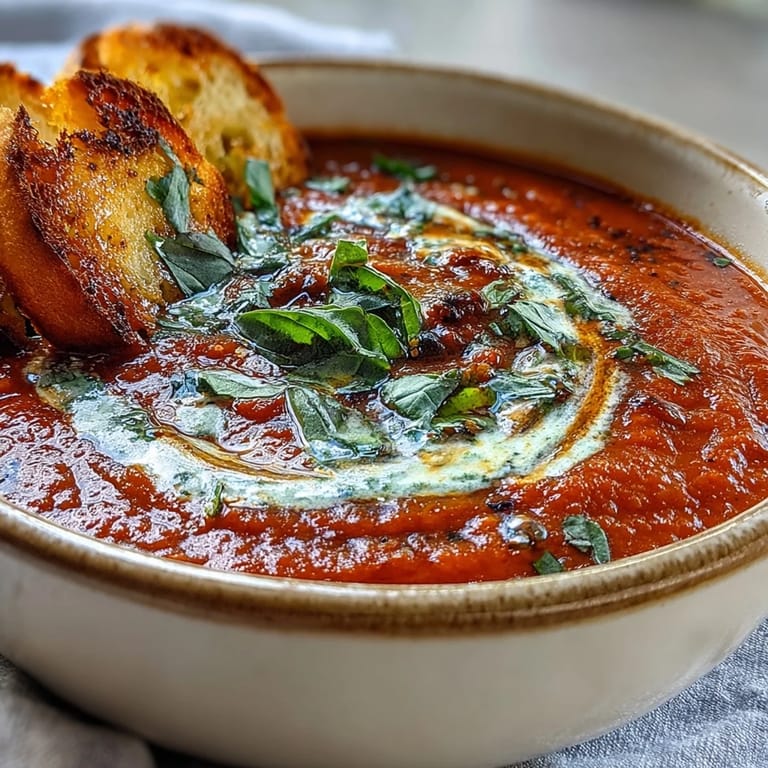
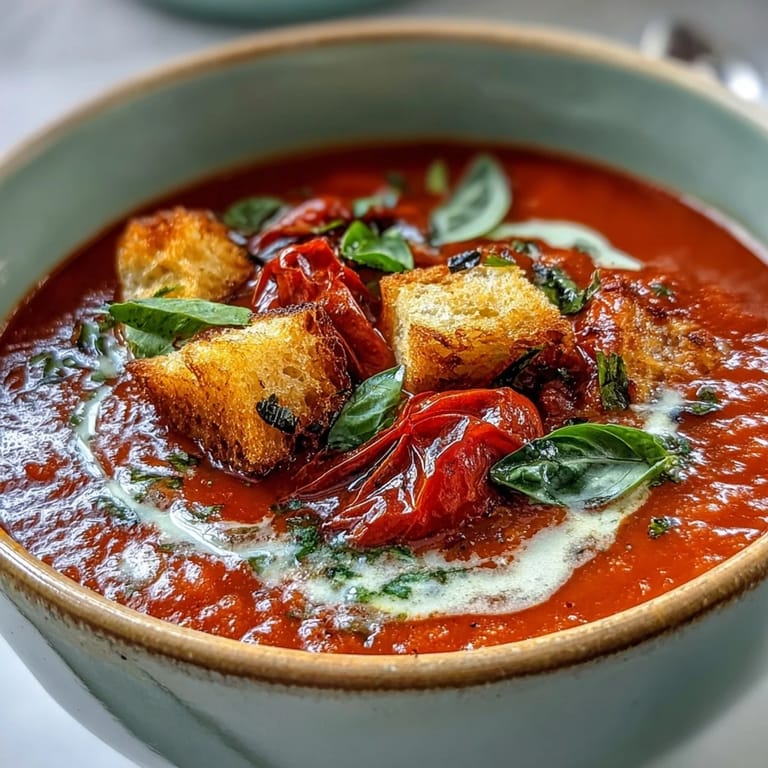
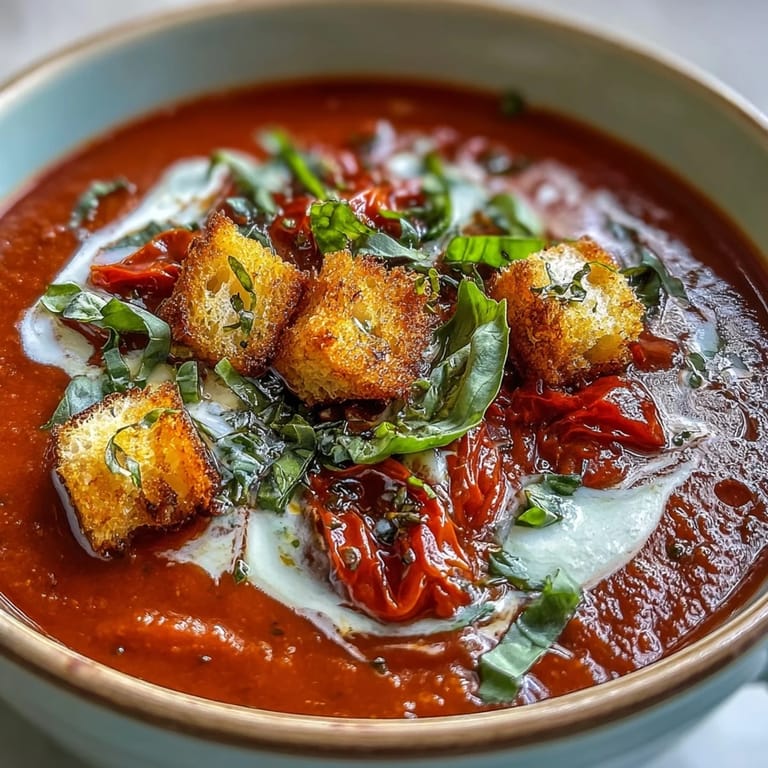
This soup begs for a companion that can stand up to its rich texture and bold acidity. A classic grilled cheese sandwich with sharp cheddar is the traditional partner for a reason. You can also elevate the presentation by swirling a little heavy cream on top just before serving. The contrast of the white cream against the orange soup looks stunning on the table.
- Top with homemade sourdough croutons for a satisfying crunch in every bite.
- Add a swirl of pesto if you want to double down on that herbal basil flavor.
- Sprinkle some red pepper flakes if you enjoy a slow building heat at the back of your throat.
 Pin it
 This bowl of soup is a warm hug for your soul on the days when you need it most. I hope it brings as much light to your kitchen as it does to mine every single time I make it.
Recipe FAQs
- → Why roast the tomatoes first instead of simmering them?
Roasting tomatoes at high heat caramelizes their natural sugars and concentrates their flavor. This technique creates depth and sweetness that you cannot achieve through simmering alone. The oven process also develops slight char notes that add complexity to the final soup.
- → Can I make this soup ahead of time?
Absolutely. This soup actually tastes better the next day as flavors have time to meld. Store in an airtight container in the refrigerator for up to 4 days. Reheat gently over medium-low heat, stirring occasionally. If you've added cream, you may notice slight separation when reheating—simply whisk to recombine.
- → What type of tomatoes work best?
Vine-ripened Roma or plum tomatoes are ideal due to their lower water content and intense flavor. However, any ripe, in-season tomatoes will produce excellent results. Avoid out-of-season greenhouse tomatoes as they lack sweetness and depth. Campari or heirloom varieties also work beautifully.
- → Is the straining step necessary?
Straining is optional but recommended for the silkiest restaurant-quality texture. If you prefer a rustic, hearty soup with more body, skip this step. The sieve removes tomato skins, seeds, and any vegetable fibers, resulting in an exceptionally smooth, refined finished product.
- → How can I make this soup vegan?
Simply omit the butter and cream, or substitute with plant-based alternatives. Coconut cream adds richness and subtle sweetness, while cashew cream provides neutral creaminess. The soup remains delicious and satisfying without dairy—roasted vegetables and fresh basil provide plenty of flavor on their own.
- → What can I serve with this soup?
Crusty garlic bread, focaccia, or grilled cheese sandwiches are classic companions. For a lighter option, serve with a simple green salad dressed with balsamic vinaigrette. Wine-wise, pair with a crisp Sauvignon Blanc, Pinot Grigio, or light red like Chianti.