 Pin it
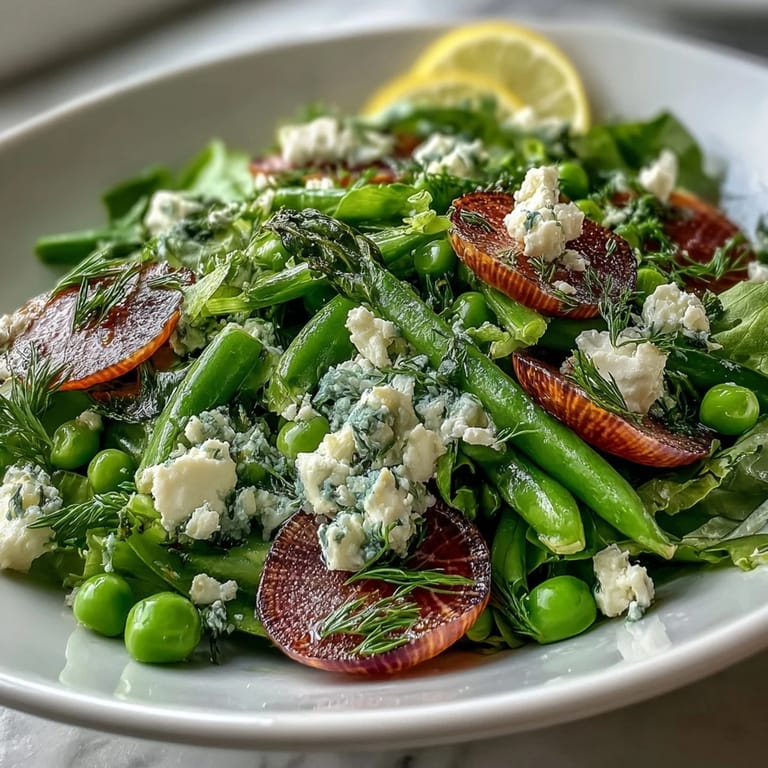
 There's this moment every spring when the farmers market suddenly explodes with color, and I find myself standing there holding a bunch of radishes, completely overwhelmed by how alive everything looks. That's when this salad came together—not from a recipe, but from the kind of cooking where you're just grabbing what speaks to you and trusting it'll work. The bright peppery snap of radishes against creamy greens, the sweetness of fresh peas catching the sun through my kitchen window, and a vinaigrette that tastes like you're drinking liquid springtime.
I made this for my neighbor last April when she'd just moved in, and we ate it standing up in her half-unpacked kitchen, laughing about how the radishes kept sliding off our forks. She asked for the recipe immediately, which honestly surprised me because it felt too simple to write down. But that's the thing about food made with good ingredients and no pretense—sometimes it sticks with people more than anything complicated ever could.
Ingredients
- Mixed spring greens: Choose a combination of arugula, baby spinach, and watercress for layers of flavor and texture; the peppery notes play beautifully against the sweet peas.
- Sugar snap peas: Slice them on the diagonal for a prettier presentation and because they catch the vinaigrette better that way.
- Fresh or thawed frozen green peas: Both work wonderfully; frozen peas are actually picked at peak ripeness, so don't skip them if fresh aren't available.
- Radishes: Slice them as thin as you can manage—they're more refreshing that way and less aggressively peppery.
- Red onion: Use only a quarter of a small one, thinly sliced, because it's there for a whisper of sharpness, not a shout.
- Extra virgin olive oil: This is where quality matters; cheap oil will make the vinaigrette taste flat.
- Fresh lemon juice: Bottled lemon juice will betray you here, so squeeze it fresh.
- Lemon zest: Finely grate it just before making the vinaigrette so you get those oils that make everything taste alive.
- Dijon mustard: It acts as an emulsifier and brings a subtle sophistication that you won't taste directly but will definitely notice without.
- Honey: Just enough to round out the acidity without sweetening the salad.
- Fresh chives: Chopped just before serving so they don't wilt and lose their delicate onion flavor.
- Feta cheese: Optional, but it adds a salty richness that makes the whole thing feel more complete.
Tired of Takeout? 🥡
Get 10 meals you can make faster than delivery arrives. Seriously.
One email. No spam. Unsubscribe anytime.
Instructions
- Gather your greens and vegetables:
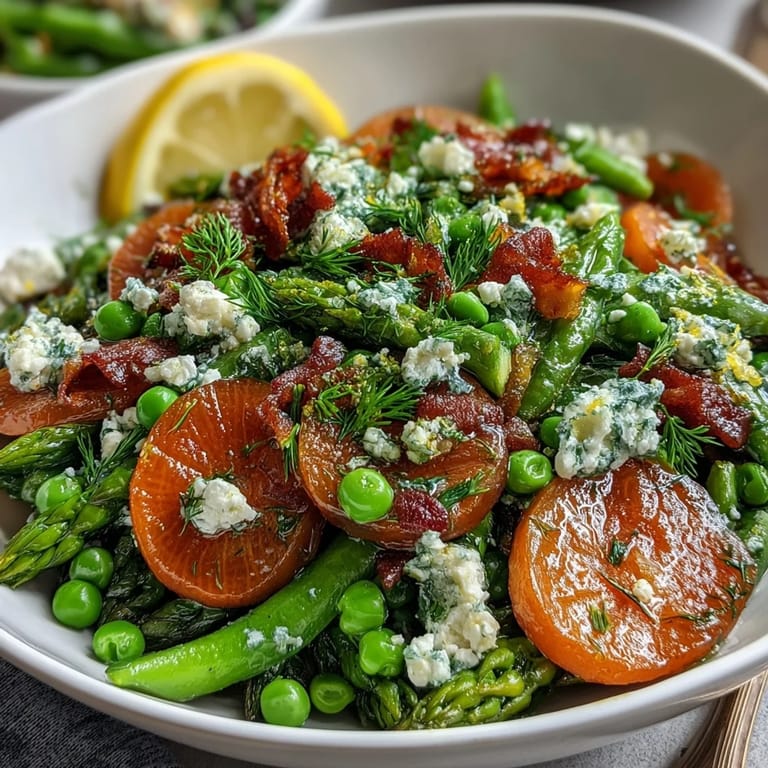
- Place the mixed greens in a large bowl, then arrange the snap peas, green peas, radishes, and red onion on top without tossing yet. This way you can see what you've got and adjust quantities if something looks skimpy.
- Make the vinaigrette:
- In a small bowl or jar, whisk the olive oil, lemon juice, lemon zest, mustard, honey, salt, and pepper together until it looks creamy and emulsified rather than separated. You'll know it's right when it coats the back of a spoon.
- Dress and toss:
- Drizzle the vinaigrette over the salad and toss gently but thoroughly, making sure every leaf gets coated. Don't be shy here—every bite should taste like the dressing found it.
- Plate and finish:
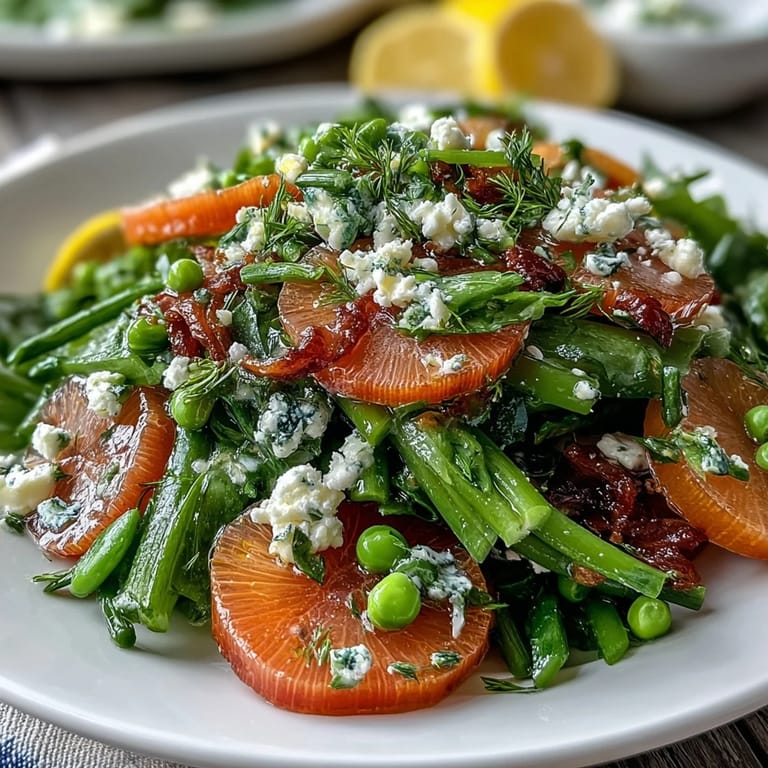
- Transfer to a serving platter or individual bowls, scatter the chives across the top, and add feta cheese if you're using it. Serve immediately while everything is still crisp and the colors are at their most vibrant.
 Pin it
 There was this Sunday lunch where my daughter's friend who claims to hate salads actually asked for seconds, and we all just sat there grinning at each other because something had shifted. It wasn't that we'd tricked her—it was that we'd made something so unadorned and true to its ingredients that there was nowhere for the salad to hide, and nowhere for doubt to live.
The Magic of Acid and Oil
A good vinaigrette is really just a conversation between acid and fat, and the lemon here is saying something sharp and clean while the olive oil is saying something round and rich. When they meet with the mustard and honey acting as mediators, something almost musical happens. I've ruined plenty of vinaigrettes by getting the ratio wrong, and what I've learned is that you want enough acid to make your mouth wake up, but enough oil so it doesn't feel aggressive.
Choosing Your Greens with Purpose
The mix of arugula, spinach, and watercress isn't just pretty—each one brings something different to the table. Arugula has that peppery attitude, spinach is tender and mild, and watercress adds a slightly mineral note that grounds everything. If you only have one type of green available, it'll still be delicious, but mixing them creates a complexity that makes you more interested in each bite.
Stretching This Into a Meal
On its own, this salad is a perfect side or light lunch, but there are days when you want it to be more substantial. I've made it with grilled chicken, with soft goat cheese instead of feta, with toasted almonds scattered across the top. The vinaigrette is so clean and bright that it welcomes additions without becoming confused or heavy.
- Add shredded rotisserie chicken or grilled salmon if you want protein that doesn't require extra cooking.
- Toast some sunflower seeds or sliced almonds in a dry pan first—the warmth brings out their flavor and the crunch is essential.
- Fresh herbs like tarragon or chervil can replace or join the chives if you find them at the market.
 Pin it
 This salad lives in that sweet spot where it's so simple that you stop apologizing for making it, and so good that people remember it. That's the whole point, really.
Recipe FAQs
- → What greens work best for this salad?
Mixed spring greens like arugula, baby spinach, and watercress provide a tender and peppery base that complements the vinaigrette well.
- → Can I use frozen peas in this dish?
Yes, thawed frozen peas work just as well as fresh ones, adding sweetness and texture to the salad.
- → How can I make the vinaigrette emulsify properly?
Whisk the lemon juice, mustard, and honey first, then slowly add the olive oil while whisking vigorously to blend the ingredients into a smooth dressing.
- → Is there a vegan alternative to feta cheese here?
Omitting the cheese or substituting with store-bought vegan feta maintains the creamy texture without dairy.
- → What additional toppings add texture to the salad?
Toasted sunflower seeds or sliced almonds provide a satisfying crunch that pairs nicely with the fresh vegetables.