 Pin it
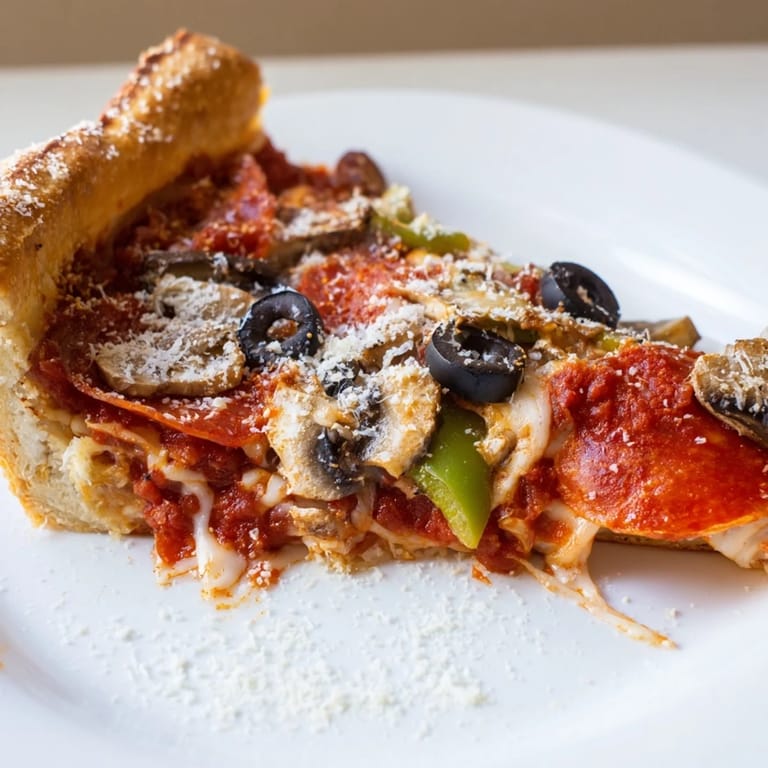
 There's something about deep dish pizza that makes you feel like you're stealing a secret from Chicago. My first attempt came on a Wednesday night when I was craving that thick, bread-like foundation and mountains of melted cheese that doesn't apologize for being indulgent. I pulled up a recipe, grabbed my cake pan as a substitute for the real thing, and three hours later I understood why people line up for hours in the cold for this stuff. It's not fancy, but it demands respect and patience.
I made this for my roommate who claimed he didn't really like pizza, which I took as a personal challenge. When he finished his second slice in silence and then went back for thirds, I knew the recipe had earned its keep. There's a particular kind of satisfaction in watching someone's resolve crumble in the face of hot melted mozzarella and a sauce that's been quietly simmering on the stove.
Ingredients
- All-purpose flour: The foundation of everything, giving structure to what will become a sturdy, chewy base that can support all those toppings without collapsing.
- Yellow cornmeal: This adds texture and a subtle sweetness that balances the richness of the cheese and butter.
- Active dry yeast: The quiet miracle worker that transforms flour and water into something airy and alive, but you need to wake it up first with warm water.
- Warm water: Temperature matters more than you'd think; too hot kills the yeast, too cold and nothing happens.
- Olive oil and melted butter: Together they create that signature richness in the dough that makes it taste less like bread and more like an indulgent treat.
- Shredded mozzarella cheese: Use the good stuff if you can, because it melts differently than the pre-packaged versions and actually tastes like cheese.
- Grated Parmesan cheese: A supporting player that adds a sharp, salty note that keeps the whole thing from becoming one-dimensional.
- Crushed tomatoes: A full can of quality tomatoes matters because you're not cooking this sauce for hours, so the tomato flavor needs to be bold from the start.
- Garlic, oregano, and basil: The holy trinity of pizza sauce; garlic gives it backbone, while the herbs whisper their dried herb promise into every spoonful.
- Your choice of toppings: Pepperoni, mushrooms, bell peppers, and olives all work, but pick what actually makes you happy instead of defaulting to what you think pizza should have.
Tired of Takeout? 🥡
Get 10 meals you can make faster than delivery arrives. Seriously.
One email. No spam. Unsubscribe anytime.
Instructions
- Wake up the yeast:
- Warm water should feel hot to the touch but not so hot you can't keep your finger in it for five seconds. Pour it over the yeast and wait for that foamy cap to appear, which means your yeast is alive and ready to work.
- Build the dough:
- Add everything else to the yeast mixture and stir until it comes together as a shaggy mess. Knead for five to seven minutes; you'll feel it transform from sticky and rough to smooth and elastic, which is when you know the gluten is doing its job.
- Let it rise:
- Place the dough in a greased bowl, cover it loosely, and find a warm spot in your kitchen. An hour later it should have roughly doubled, which means you're ready to move forward.
- Make the sauce while you wait:
- Sauté your minced garlic until it's golden and fragrant, then add the tomatoes and herbs. Simmer gently so the flavors meld without the sauce reducing to nothing, and you'll taste the difference between rushed sauce and thoughtful sauce.
- Prepare your pan:
- Grease a 12-inch deep-dish pan or even a round cake pan with olive oil; this is not the time to skimp on the oil because it helps the crust get crispy on the bottom.
- Press the dough:
- Your risen dough will be puffy and willing to stretch. Push it gently into the pan, working it up the sides to create those characteristic deep-dish walls that hold everything together.
- Layer strategically:
- Cheese goes down first directly on the dough, then your toppings, then sauce, then a final sprinkle of Parmesan. This order matters because the cheese acts as a barrier between the moist sauce and the dough, keeping the crust crispy instead of soggy.
- Bake with patience:
- At 425°F, watch for the crust to turn golden brown and the sauce to bubble at the edges, which takes 35 to 40 minutes. If the edges brown too quickly, loosely tent them with foil and let the middle catch up.
- Rest before slicing:
- Ten minutes might not sound like much, but it lets the cheese set and the structure firm up so your slice doesn't collapse into a puddle.
 Pin it
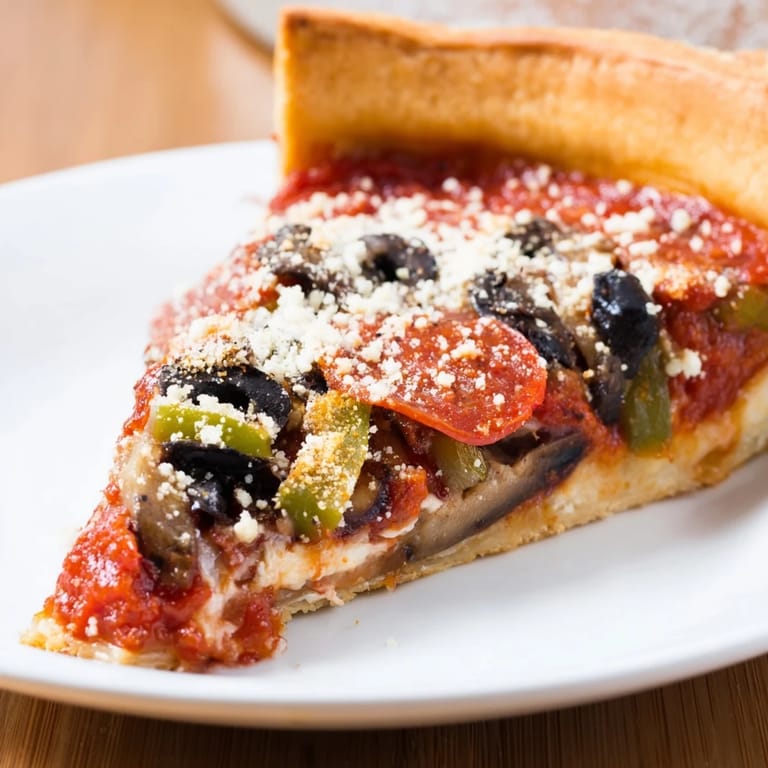
 I remember pulling this pizza from the oven and the smell was so overwhelming that my neighbor actually knocked on the door asking what I was making. There's something about the way butter and yeast and melting cheese smell together that makes people lose their minds, and I've learned to just accept that as part of the recipe's magic.
Why Deep Dish Works
Deep dish pizza isn't about being thin and crispy; it's about abundance and comfort. The thick crust means every bite has substance, the layers of cheese and toppings create pockets of flavor, and the sauce distribution ensures you get equal parts savory, cheesy, and tomatoey in every slice. It's the kind of pizza that satisfies without apology.
Customization Without Limits
The beauty of making this at home is that you can abandon the recipe the moment the dough is ready. Vegetarians can skip the pepperoni entirely and load up on mushrooms, olives, and roasted peppers, while meat lovers can experiment with sausage, bacon, or anchovies if they're feeling brave. I've even tried jalapeños mixed with the pepperoni, and while my taste buds argued about it, my stomach was grateful.
A Few Final Thoughts
Making pizza from scratch teaches you patience because you can't rush the rise, creativity because you can top it however you want, and humility because sometimes your oven has other ideas. The first time might not be perfect, but the second time gets better, and by the third time you'll know this recipe by heart. This is the kind of cooking that brings people together, that fills a kitchen with warmth, and that reminds you why food matters.
- If your dough seems too sticky, dust it with a little flour, but remember that slightly sticky dough actually produces better texture than dough that's too dry.
- You can make the dough the night before, let it rise slowly in the refrigerator, and bake it fresh the next day for that authentic Chicago pizza shop experience.
- Serve it with a simple green salad and cold beer, and suddenly you've got a meal that feels like a celebration.
 Pin it
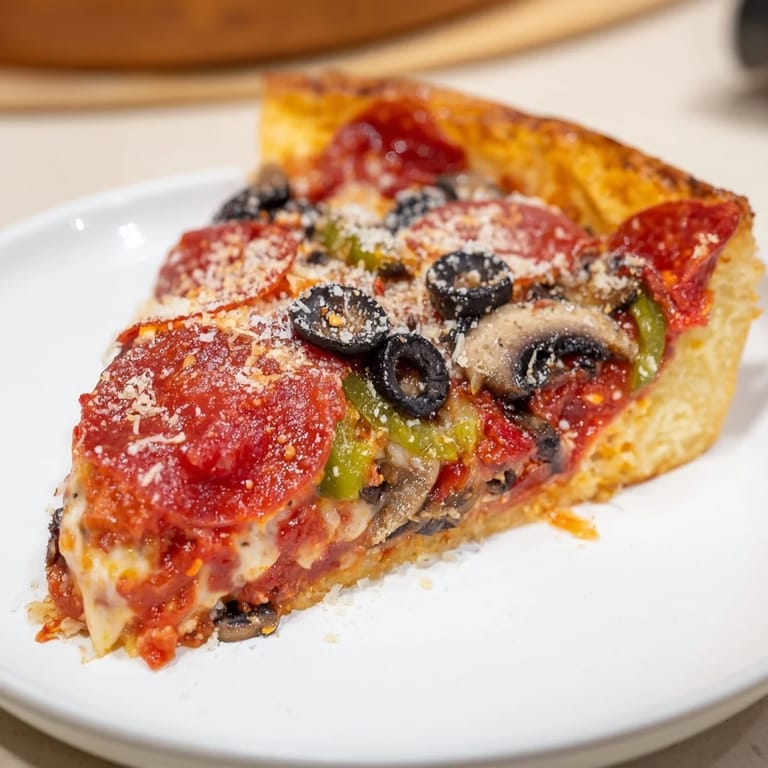
 There's nothing quite like feeding people pizza you made yourself, and this Chicago-style version with its buttery crust and generous layers of cheese and toppings makes people feel genuinely cared for. Keep making it, keep tweaking it, and soon it becomes the version that your friends remember.
Recipe FAQs
- → How is the deep dish dough prepared?
The dough combines flour, cornmeal, yeast, warm water, olive oil, butter, and salt, kneaded until smooth, then left to rise for about an hour for a soft yet sturdy crust.
- → What kind of cheese is used in this dish?
Shredded mozzarella forms the main layer, complemented with grated Parmesan for extra flavor. Optional cheese blends like provolone can be added.
- → How is the tomato sauce made?
Olive oil, minced garlic, crushed tomatoes, oregano, basil, sugar, salt, and pepper are simmered together to create a fragrant, flavorful sauce.
- → Can the toppings be customized?
Yes, toppings like pepperoni, mushrooms, bell peppers, and black olives can be mixed or substituted to suit preferences, including vegetarian options.
- → What baking method ensures the perfect crust?
Baking at 425°F in a greased deep-dish pan until golden with bubbling sauce, typically 35–40 minutes, provides the ideal balance of crispness and softness.
- → Any tips for achieving the best flavor?
Allow the crust to rise fully and bake evenly. Rest the dish for 10 minutes after baking to set layers and enhance taste and texture.