 Pin it
 My first real attempt at General Tso's chicken came from pure stubbornness—I'd eaten it countless times at the corner takeout and decided one night that I could absolutely replicate that glossy, crispy-then-saucy magic at home. The kitchen filled with the smell of hot oil and garlic in a way that immediately told me I was onto something real, and when those golden pieces hit the sauce, the sizzle was unmistakable. That dish taught me that restaurant-quality food isn't a mystery; it's just technique, timing, and not being afraid of a hot wok.
I made this for my sister one random Thursday when she texted asking what was for dinner, and watching her eyes light up when she realized it wasn't takeout was worth every minute of prep work. She asked for the recipe immediately, which meant I'd officially crossed over from just cooking to actually creating something people wanted to learn from.
Ingredients
- Chicken thighs (600g, cut into bite-sized pieces): Thighs stay juicier than breast meat when fried, and they absorb the sauce beautifully without drying out.
- Eggs, soy sauce, sesame oil, and white pepper: This marinade does two things—it seasons the chicken and helps the coating stick, creating that crispy exterior.
- Cornstarch and all-purpose flour (1 cup and ½ cup): The ratio matters; cornstarch alone gets too crispy-shattered, while flour alone won't give you that shatteringly light texture.
- Chicken broth, soy sauce, rice vinegar, hoisin, and sugar: These five ingredients are your sauce backbone—the interplay between salty, tangy, and sweet is what makes this dish craveable.
- Dried red chilies: Fresh ones lose their punch when cooked; dried chilies release their heat slowly and flavor the oil itself, which then carries that warmth into everything.
- Garlic, ginger, and sesame oil: These finish the sauce with depth and aroma, making it taste complete rather than one-dimensional.
Tired of Takeout? 🥡
Get 10 meals you can make faster than delivery arrives. Seriously.
One email. No spam. Unsubscribe anytime.
Instructions
- Marinate the chicken:
- Whisk together eggs, soy sauce, sesame oil, and white pepper in a bowl, then coat the chicken pieces thoroughly. This isn't just for flavor—the egg creates a tacky surface that helps the coating cling and fry into something crispy rather than floury.
- Bread the pieces:
- Mix cornstarch and flour in a shallow bowl and roll each piece through it, shaking off the excess. Over-coating leads to thick, doughy fried chicken, so be generous but not careless.
- Fry the chicken:
- Heat oil to 350°F (180°C)—a thermometer isn't fancy, it's essential—and fry in batches so pieces don't crowd the pan and steam instead of crisp. The chicken should turn golden in about 4–5 minutes; if it takes longer, your oil isn't hot enough.
- Prepare the sauce:
- Combine broth, soy sauce, vinegar, hoisin, sugar, and sesame oil, then whisk cornstarch with water to create a slurry and stir it in. The slurry prevents lumps and gives you that glossy, clinging sauce that coats every piece.
- Bloom the aromatics:
- Heat oil in a clean wok and toast the dried chilies, garlic, and ginger for about a minute until the kitchen smells incredible. This short window transforms raw aromatics into something fragrant and integrated.
- Thicken and gloss the sauce:
- Pour in your sauce mixture and stir constantly for 2–3 minutes until it shifts from loose and thin to glossy and clinging. You'll see the exact moment it's ready—the color deepens and the bubbles change texture.
- Toss it all together:
- Add the fried chicken and stir until every piece glistens with sauce. Work quickly so the chicken doesn't sit in the heat and start losing its crispness.
- Serve immediately:
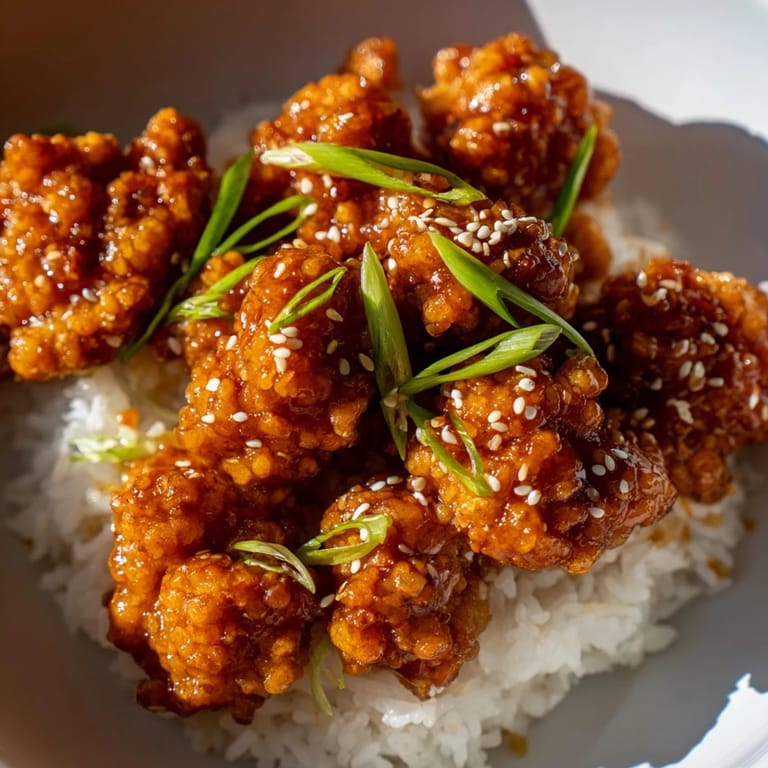
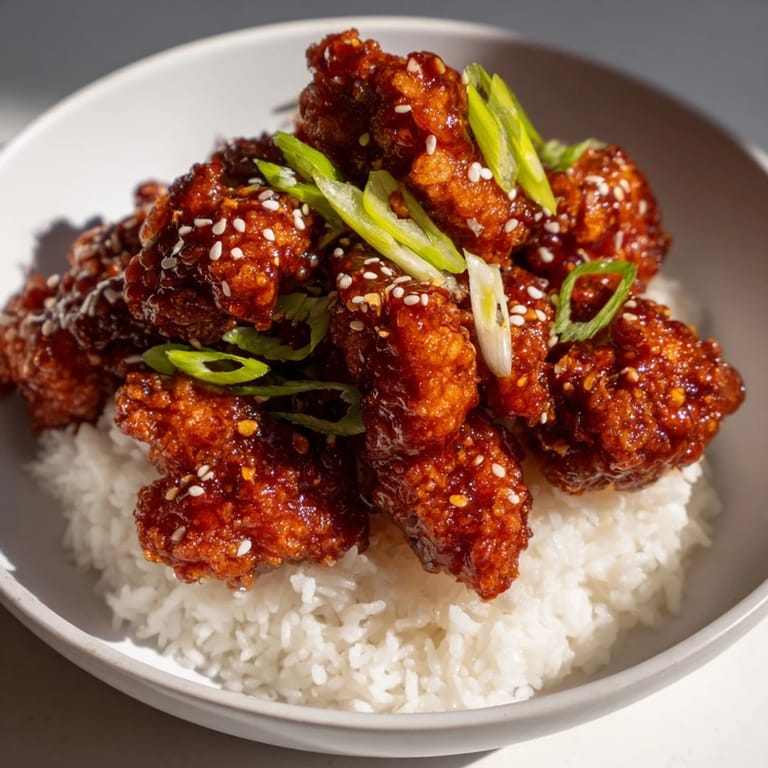
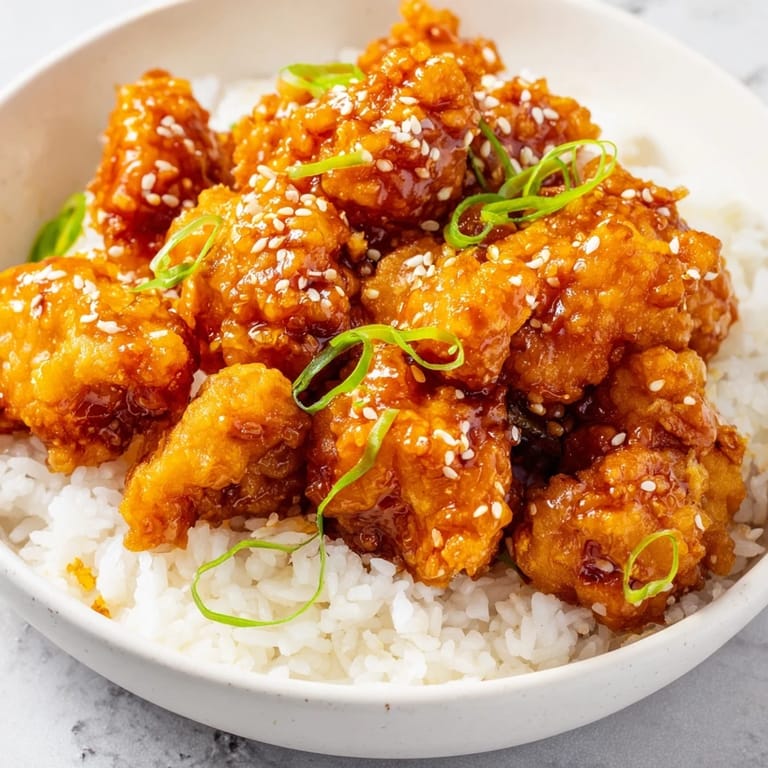
- Plate over steamed rice and top with spring onions and sesame seeds while everything is still hot and the contrast between crispy and saucy is at its peak.
 Pin it
 There's a moment when you pour that glossy sauce over golden chicken and the steam rises up and hits your face—that's when you know you've nailed it, and that moment never gets old. It's proof that you don't need a restaurant kitchen or years of training; you just need to respect the heat, trust the technique, and taste as you go.
The Crispiness Secret
The difference between good and great General Tso's chicken lives in that coating. I learned this the hard way after making it with just cornstarch and watching it turn into fried chicken dust before I even got it to the sauce. The trick is respecting the ratio—cornstarch gives you the shatter, flour gives you structure, and together they create a crust that stays crispy even when glossed. Frying in batches matters too; I once tried to cram all the chicken in at once to save time, and ended up with steamed, pale pieces instead of that burnished golden color that tells you it's ready.
Playing with Heat and Flavor
Dried red chilies are where I learned that heat and flavor aren't the same thing. When you toast them in hot oil for just a minute, they release oils and compounds that spread throughout the sauce, making it taste complex and warm rather than just painfully spicy. If you prefer milder food, you can swap them for fewer chilies or just a pinch of chili flakes, and the dish will still taste authentic because the base sauce—with its salty, sweet, and tangy notes—carries the real flavor. I've made this for people who can't handle much heat, and by keeping the chilies minimal, the sauce still tastes bright and craveable.
Building Your Own Shortcuts
This recipe is flexible enough to fit into your life, not the other way around. If deep-frying feels like too much, you can bake the breaded chicken at 400°F (200°C) for about 15 minutes, turning halfway through, and you'll still get a crispy exterior and juicy interior. The sauce remains the same, so the final dish tastes nearly identical even if the method changes. Chicken breast works if that's what you have on hand, though thighs genuinely do stay juicier and more forgiving when fried. One more thing: if you can't find Shaoxing wine, just skip it rather than substituting—it adds depth, but the recipe works beautifully without it.
- Make the sauce while the chicken fries so everything comes together at the right temperature.
- Taste the sauce before adding the chicken; this is your chance to adjust sweetness or saltiness.
- Leftover fried chicken can be reheated in a 350°F oven for about 8 minutes to restore crispness.
 Pin it
 General Tso's chicken is one of those dishes that tastes like celebration, even when you're eating it alone on a Tuesday night. Once you understand how each element works—the crispy coating, the glossy sauce, the heat and brightness—you've learned a principle that applies to so much of cooking: respect your technique, and the flavors will follow.
Recipe FAQs
- → How do I achieve crispy chicken pieces?
Coat the chicken thoroughly with a mixture of cornstarch and flour before frying in hot oil at 180°C until golden. Fry in batches to maintain oil temperature and crispiness.
- → Can the spiciness be adjusted?
Yes, adjust the number of dried chilies or chili flakes according to your preferred heat level, or omit them for a milder version.
- → Is there a lighter cooking alternative to deep-frying?
Yes, baking or air-frying the coated chicken pieces reduces oil usage while still delivering a crispy texture.
- → What are good garnishes to enhance flavor and presentation?
Spring onions and toasted sesame seeds add freshness and a nutty crunch that complement the dish well.
- → What side pairs well with this dish?
Steamed white rice works perfectly to balance the bold sauce and crispy chicken pieces, soaking up the flavorful glaze.