 Pin it
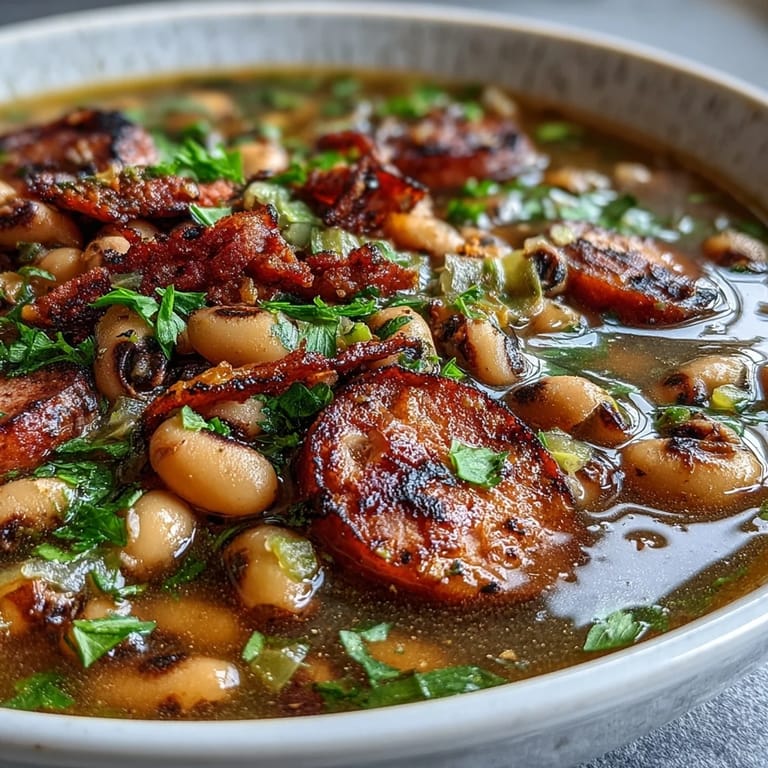
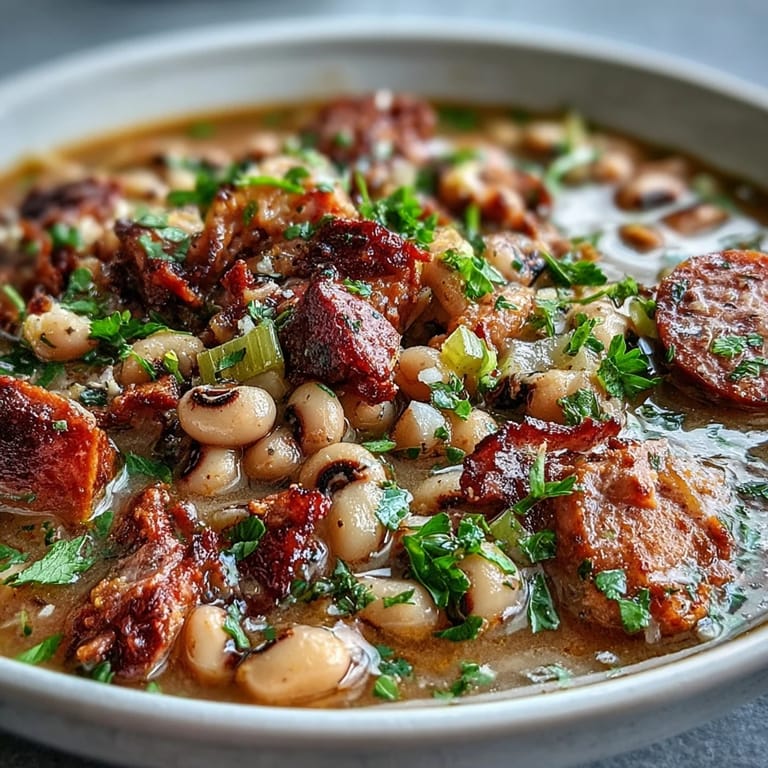
 My grandmother used to say that black-eyed peas were luck wrapped in a bowl, especially on New Year's Day when the whole family gathered around her kitchen table. I didn't understand it as a kid, but years later, standing in my own kitchen on a cold January morning, stirring a pot of these smoky, tender peas, it clicked. There's something about the ritual of this dish—the way the sausage browns, how the vegetables soften into the broth, the smell that fills your home—that feels less like cooking and more like honoring something real.
I made this for my coworkers during a potluck last January, and I'll never forget watching someone who'd never had properly cooked black-eyed peas take that first bite. They just stopped and looked at their bowl like they'd discovered something secret. That's when I realized this wasn't just comfort food—it was a conversation starter, a bridge between traditions.
Ingredients
- Smoked sausage (Andouille or Kielbasa), sliced: This is where the soul of the dish lives; don't skip it or swap it for regular sausage, as the smoke is essential.
- Thick-cut bacon, diced: The rendered fat becomes your flavor base, so this isn't an ingredient you can thin out.
- Dried black-eyed peas, rinsed and sorted: Always sort through them first—sometimes a small stone hides in there, which I learned the hard way by biting down on one.
- Onion, green bell pepper, and celery: This trio is called the holy trinity in Southern cooking, and together they create an aromatic foundation that makes everything taste right.
- Garlic cloves, minced: Fresh garlic makes all the difference; jarred just won't give you the brightness you need here.
- Low-sodium chicken broth: Low-sodium lets you control the salt and prevents the dish from becoming overly salty as it simmers.
- Smoked paprika, dried thyme, cayenne, and black pepper: These spices build complexity; the paprika echoes the smokiness of the meat, while cayenne gives an optional heat that lingers pleasantly.
- Bay leaves: They perfume the entire pot and should be removed before serving, though I've definitely fished one out after plating.
- Fresh parsley: A bright, final touch that cuts through the richness and adds color.
Tired of Takeout? 🥡
Get 10 meals you can make faster than delivery arrives. Seriously.
One email. No spam. Unsubscribe anytime.
Instructions
- Soak your peas the night before (or use the quick method):
- If you have time, cover your rinsed peas with water and let them sit overnight in the fridge—this softens them evenly and shortens cooking time. If you're short on time, pour boiling water over them, cover, and wait an hour; it works almost as well and feels a bit like cheating in the best way.
- Render the bacon and brown the sausage:
- Cut your bacon into small pieces and let them cook slowly over medium heat until they're crispy and have released their fat—this takes about 5 to 7 minutes. Remove them with a slotted spoon, then add your sausage slices to that same pot and let them brown in the bacon fat, which adds incredible depth.
- Build your aromatic base:
- Without draining the fat, add your diced onion, bell pepper, and celery to the pot, stirring occasionally until they're soft and translucent, roughly 5 to 6 minutes. The vegetables will stick slightly to the bottom—that's called fond, and it's pure flavor; don't scrape it away yet.
- Wake up the aromatics with garlic:
- Stir in your minced garlic and let it cook for just one minute until it becomes fragrant but not brown, which would make it bitter.
- Combine everything into the braise:
- Add your drained peas, chicken broth, water, bay leaves, and all your spices to the pot, stirring well to distribute the seasonings. Return the cooked bacon and sausage, then bring the whole thing to a boil over medium-high heat.
- Let time do the work:
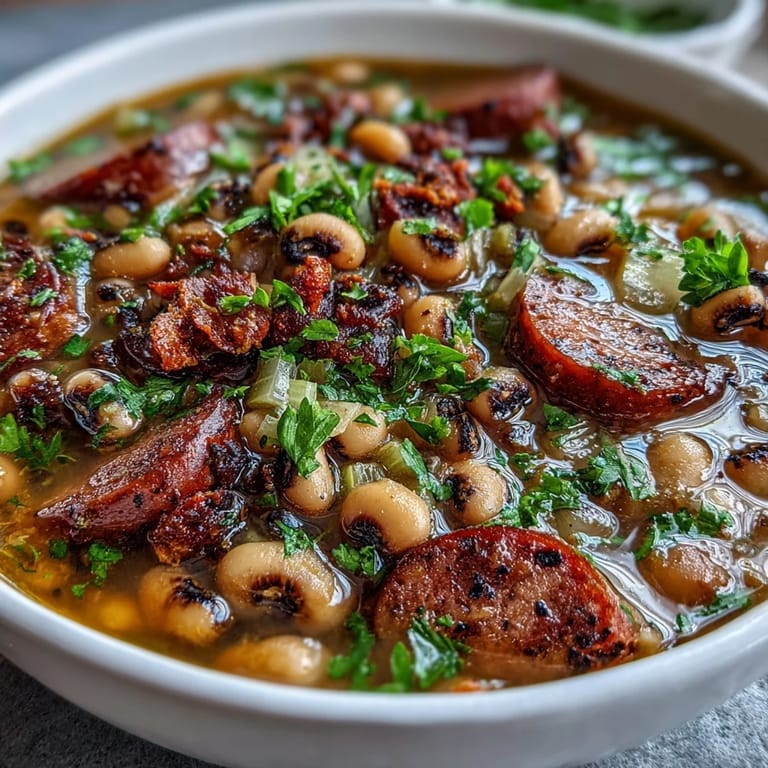
- Once it boils, reduce the heat to low, cover with a lid, and let it simmer gently for 1 to 1.5 hours until the peas are tender and the broth tastes deep and complex. You'll know it's done when you can easily break a pea between your teeth.
- Taste, adjust, and finish:
- Remove from heat, fish out the bay leaves, taste for salt and spice, and adjust as needed—some broths are saltier than others, so trust your palate. Sprinkle with fresh parsley right before serving.
 Pin it
 There's a quiet moment, usually somewhere around the 45-minute mark of cooking, when the entire pot smells like it's been simmering for hours and you realize you've made something worth coming home to. That's the moment when this dish stops being just dinner and becomes something you'll want to make again and again.
The New Year Tradition Behind This Dish
In the South, black-eyed peas on January 1st aren't just folklore—they're a deliberate choice to start the year with intention. The peas represent coins, and eating them is meant to bring prosperity, but honestly, the real luck is in the comfort of knowing exactly what you're making and why. Every culture has these kinds of anchor recipes, and this is one that's worth honoring.
Pairing and Serving Suggestions
This dish reaches its full potential when served over fluffy white or brown rice, which catches all that beautiful broth. Cornbread on the side is non-negotiable—it's there to soak up every last bit of the pot, and iced tea or a crisp white wine cuts through the richness perfectly. If you want to build a full Southern plate, add a side of sautéed collard greens or simple coleslaw for brightness.
Making It Your Own
Once you understand the formula—rendered fat, caramelized vegetables, tender legumes in a seasoned broth—you can adjust this recipe to match what's in your pantry or your taste preferences. A vegetarian version swaps the sausage and bacon for extra smoked paprika or a splash of liquid smoke, and adding diced tomatoes in the last 20 minutes brings acidity that balances the richness beautifully. The beauty of this kind of cooking is that it's forgiving and adaptable, which is probably why it's lasted this long.
- Collard greens stirred in during the last 10 minutes add earthiness and extra nutrition without changing the core flavor.
- A pinch of cayenne can always be added at the table if someone wants heat, so start gentle and let people adjust to their own preference.
- Leftover peas thicken as they cool, so add a splash of broth when reheating to restore them to their original consistency.
 Pin it
 This is the kind of recipe that teaches you something every time you make it, whether it's how to build flavor gradually or why tradition matters. Serve it with warmth and an open door, and watch it become a favorite in your home too.
Recipe FAQs
- → Do I need to soak black-eyed peas before cooking?
Yes, soak dried black-eyed peas overnight in water, then drain and rinse. For a quicker method, cover with boiling water and let stand for 1 hour before cooking.
- → Can I make this vegetarian?
Absolutely. Omit the bacon and sausage, use vegetable broth instead of chicken broth, and add extra smoked paprika or liquid smoke to maintain that smoky depth of flavor.
- → What should I serve with black-eyed peas?
They're traditionally served over steamed white rice with hot sauce on the side. Cornbread and sautéed greens like collards or kale make excellent accompaniments. Iced tea or a crisp white wine pairs nicely.
- → How long do leftovers keep?
Store in an airtight container in the refrigerator for up to 4 days. The flavors actually improve after a day or two. Reheat gently on the stovetop, adding a splash of water or broth if needed.
- → Why are black-eyed peas eaten on New Year's?
Southern tradition holds that eating black-eyed peas on New Year's Day brings prosperity and luck in the coming year. The peas represent coins, and when served with greens (representing paper money), the meal symbolizes wealth and good fortune.
- → Can I use canned black-eyed peas instead?
You can substitute canned peas, but the texture and flavor will differ. Use about 3 cans (drained and rinsed) and reduce the cooking time to 30-45 minutes. Dried peas yield a more authentic, tender result.