 Pin it
 The first time I made poke bowls at home, I was honestly just trying to recreate that light, satisfying feeling from a beach café I'd visited years ago. I remember standing in my kitchen on a Tuesday evening, holding a perfectly firm piece of sushi-grade salmon, thinking about how the simplest meals often taste the best. Something about the ritual of assembling everything—the rice still warm, the fish glistening in its soy-ginger marinade—made me realize this wasn't just dinner, it was edible calm.
I made this for my partner on one of those nights when we were both too tired to order takeout but too hungry to settle for something boring. Watching them assemble their own bowl, choosing which vegetables and how much spicy mayo, felt like the opposite of cooking—it felt like sharing. That's when I knew this recipe would stick around.
Ingredients
- Sushi-grade salmon or tuna (400 g, diced): This is where everything starts—the quality of your fish matters more than anything else, so find a fishmonger you trust and don't apologize for asking questions.
- Soy sauce (2 tbsp): The backbone of your marinade; cheap soy sauce tastes thin, so this is one splurge that's worth it.
- Sesame oil (1 tbsp): A little goes a long way—it's like the whisper of flavor that makes people wonder what makes it taste so good.
- Rice vinegar (1 tbsp for marinade, 2 tbsp for rice): This bright acidity keeps everything from feeling heavy; don't skip it even if you think you might.
- Honey or agave syrup (1 tsp): Just enough sweetness to balance the salty-sour punch without being noticeable.
- Fresh ginger (1 tsp grated): Grate it just before you use it if you can—the difference is real.
- Sesame seeds (1 tsp plus 1 tbsp toasted): The toasted ones are worth buying separately; they taste like nutty sunshine.
- Sushi rice or short-grain rice (320 g): The canvas for everything else—rinsing it properly makes it creamy and delicious.
- Water (480 ml): Use filtered if your tap water is heavy or mineral-forward.
- Sugar and salt (1 tbsp and ½ tsp): These wake up the rice and make the whole bowl sing.
- Ripe avocado (1): Pick one that yields just slightly to pressure; slice it right before serving so it doesn't brown.
- Cucumber (1 medium, thinly sliced): The cooling element that keeps everything from feeling rich.
- Carrots (2 medium, julienned): Raw carrots add a gentle crunch and natural sweetness.
- Edamame beans (100 g, shelled and cooked): If you're using frozen, thaw them gently under warm water.
- Radishes (4, thinly sliced): Their peppery bite cuts through the creaminess beautifully.
- Spring onions (2, thinly sliced): Use both white and green parts for different flavor layers.
- Nori sheets (1, cut into strips): Toast it briefly over a flame if you want it to smell like the ocean.
- Microgreens or sprouts (optional): These are pure garnish, but they make it feel intentional and alive.
- Spicy mayo (4 tbsp mayonnaise mixed with 1-2 tsp sriracha): Start with 1 teaspoon of sriracha and taste as you go—heat preference is deeply personal.
- Pickled ginger and lime wedges (optional): These are your finishing touches, your chance to adjust the flavor right at the table.
Tired of Takeout? 🥡
Get 10 meals you can make faster than delivery arrives. Seriously.
One email. No spam. Unsubscribe anytime.
Instructions
- Rinse and cook the rice:
- Rinse your rice under cold water, stirring it gently with your fingers until the water runs almost clear—this removes the starch and keeps the rice from becoming gluey. Combine rinsed rice with water in a saucepan, bring it to a boil over medium-high heat, then reduce to low, cover tightly, and let it simmer for exactly 15 minutes.
- Steam and season the rice:
- Remove the pot from heat and let it sit, covered, for 10 minutes—this is when the magic happens and the rice becomes fluffy instead of mushy. Stir in the rice vinegar, sugar, and salt while the rice is still warm, folding gently so each grain gets coated without breaking.
- Build your marinade:
- In a separate bowl, whisk together soy sauce, sesame oil, rice vinegar, honey, and grated ginger until it smells impossibly good. Add your sesame seeds and stir one more time—you're creating something that will make the fish taste like memory.
- Marinate the fish:
- Add your diced fish to the marinade and toss very gently—you want it coated but not falling apart. Cover and refrigerate for 10 to 15 minutes; any longer and the acid will start to change the texture in ways you might not want.
- Prep all your vegetables:
- While the fish marinates, slice your avocado, cucumber, and radishes, julienne your carrots, and slice your spring onions. If your edamame aren't already cooked, simmer them briefly in salted water, then drain and cool.
- Assemble your bowls:
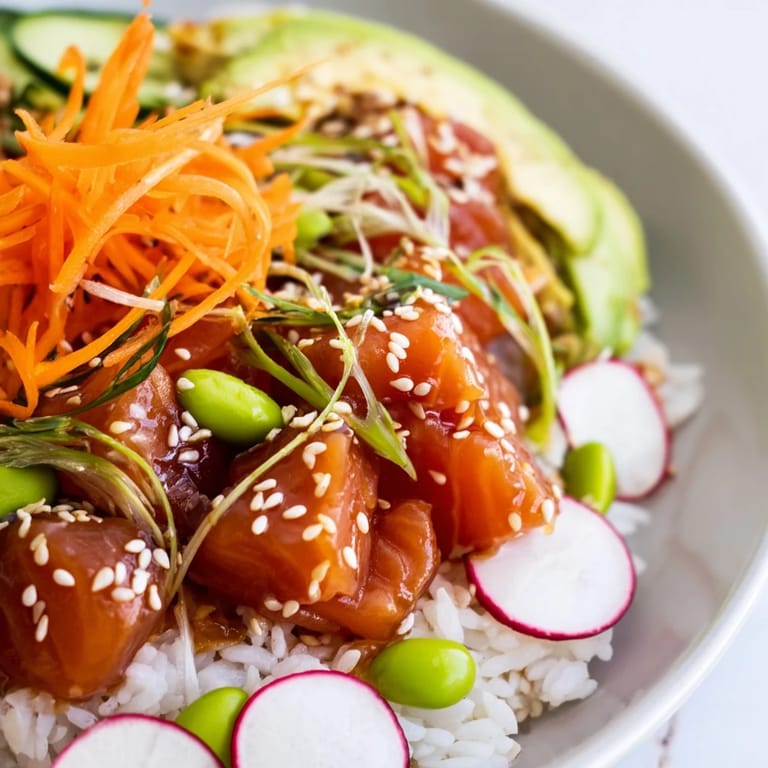
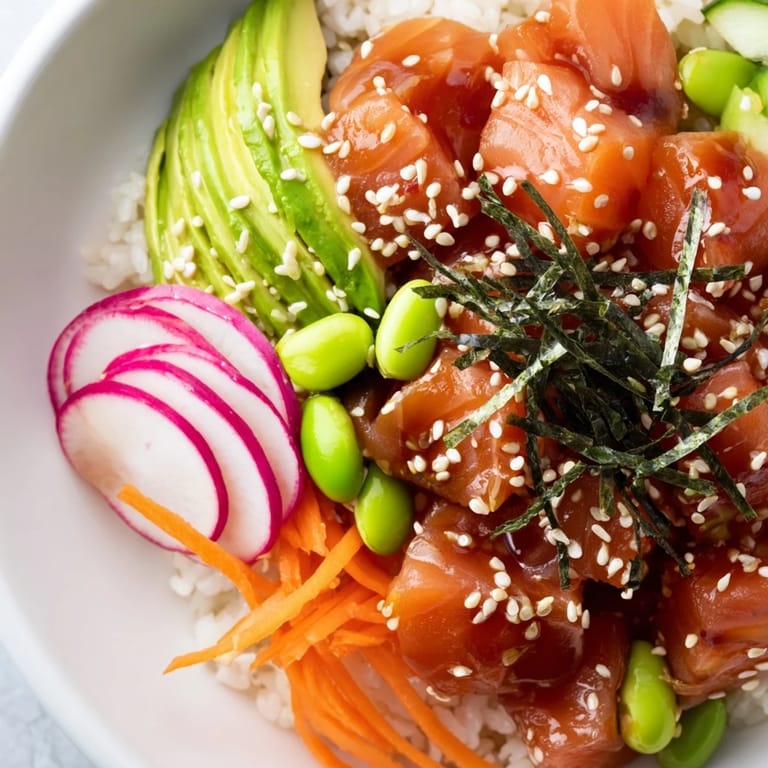
- Divide the cooled rice among four bowls, then arrange each topping in its own little section around the rice—it's not just beautiful, it lets each person customize as they eat. Crown everything with the marinated fish, nori strips, and a scatter of toasted sesame seeds.
- Finish and serve:
- Drizzle spicy mayo and soy sauce across the top just before serving, add pickled ginger and lime wedges on the side, and watch people's faces light up when they take the first bite.
 Pin it
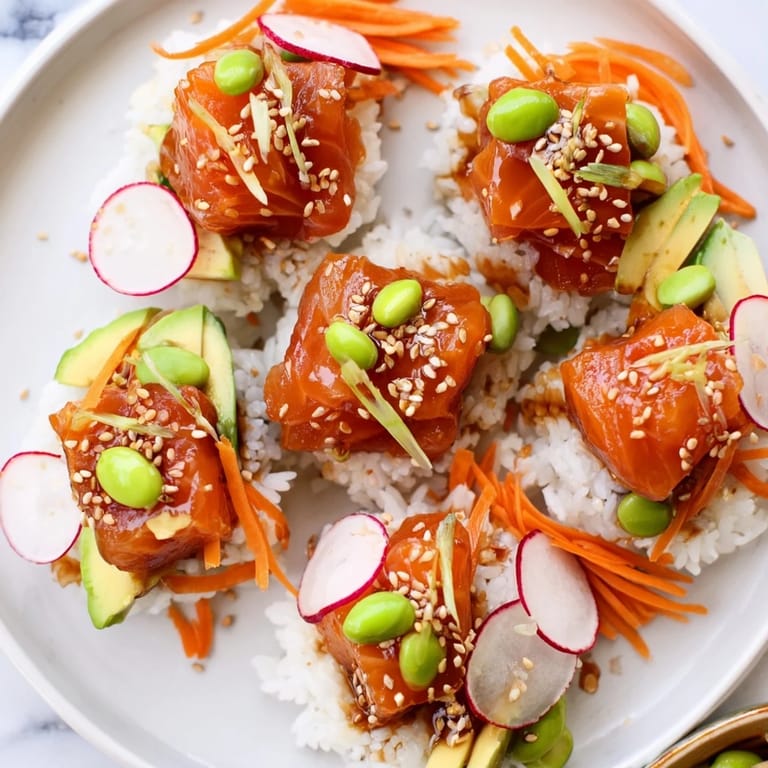
 There's a moment after you've assembled everything but before anyone takes that first bite where the bowl just looks perfect—colors arranged like you're someone who knows what they're doing, flavors about to harmonize in a way that feels almost musical. I live for that moment.
Why This Works as a Meal
Poke bowls are one of those rare dishes that feel indulgent but aren't heavy at all—the rice is your grounding element, the fish is pure protein, and everything else is vegetables and healthy fats. It's satisfying enough to be a real dinner but light enough that you don't feel weighted down afterward. I've made this for athletes, for people recovering from illness, for lazy Sundays, and it works for all of them.
Customization Is Part of the Point
One of the things I love most about this recipe is that it doesn't feel breakable—you can swap vegetables based on season or mood, add mango in summer, use tofu if you're feeling vegetarian one week. I've added thinly sliced pineapple and it tasted like a beach in a bowl; I've used whatever crunchy vegetables were left in the fridge and it still tasted intentional. The structure is strong enough to hold your improvisation.
Sauce Strategy and Flavor Layering
The spicy mayo and soy sauce aren't just toppings—they're the final words in this flavor story, so don't be shy with them. I learned to drizzle the spicy mayo in a spiral pattern so it reaches every bite, and to have extra soy sauce on the side so people can adjust to their own salt preference. Some nights I make a ginger-forward version by adding extra pickled ginger; other times I squeeze the lime right over everything.
- Mix your spicy mayo fresh if you can; it tastes brighter than mayo that's been sitting for days.
- If sriracha feels too hot for your crew, try using a milder hot sauce or just mayo with a pinch of wasabi.
- Lime juice added at the end brightens everything and makes the whole bowl taste alive.
 Pin it
 This bowl has become one of those recipes I make when I want to feel like I'm taking care of myself or someone I love. It's simple, it's bright, and somehow it always tastes a little bit like a small vacation.
Recipe FAQs
- → What kind of fish is best for this bowl?
Sushi-grade salmon or tuna works best due to their fresh texture and flavor that pairs well with the marinade.
- → How do I prepare the rice for the bowl?
Rinse sushi rice until water runs clear, cook it with water, let it steam, then season with rice vinegar, sugar, and salt for flavor.
- → Can I substitute the fish for a plant-based option?
Yes, marinated tofu or tempeh can be used as a flavorful alternative for a vegetarian variation.
- → What sauces complement this dish?
Spicy mayo, soy sauce, and optionally pickled ginger add depth and balance to the fresh ingredients.
- → Are there any recommended garnishes?
Toasted sesame seeds, nori strips, microgreens, and lime wedges enhance flavor and visual appeal.