 Pin it
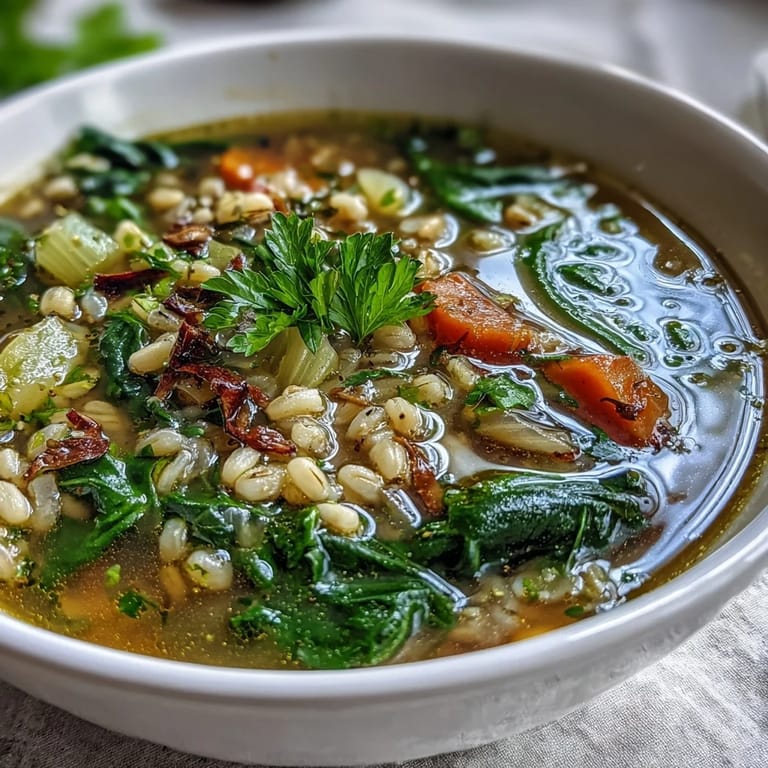
 There's this moment every spring when I stand in the kitchen, looking at what's left in my vegetable drawer—those last hardy root vegetables from winter sitting alongside the first tender greens that just arrived at the market—and I think, why not marry them together? That's exactly how this soup came about, on a blustery March afternoon when the weather couldn't decide what season it wanted to be. I had leeks and carrots that needed using, some pale green cabbage, and a handful of spinach that seemed almost apologetic for how delicate it looked compared to everything else. What emerged from that pot was something that felt like a gentle bridge between seasons, with barley giving it the kind of substance that makes you feel truly nourished.
I made this for my neighbor last year when she was recovering from surgery, and I'll never forget her face when she tasted it—she closed her eyes and said it tasted like spring was finally happening. That's when I realized this soup isn't just about vegetables and broth; it's about that quiet moment of care you offer someone, served in a warm bowl with a crusty piece of bread on the side.
Ingredients
- Leek, white and light green parts only: Slice it carefully because leeks hide dirt between their layers—I learned that the hard way and now I always halve them lengthwise and rinse between the layers under cold running water.
- Carrots and parsnips: The sweet undertone from these two together is what gives the soup its backbone, so don't skip the parsnips even if you think they're an old-fashioned vegetable.
- Rutabaga: It has this slightly peppery, earthy flavor that makes people ask what the secret ingredient is, but if you can't find it or don't like it, potatoes or sweet potatoes work beautifully too.
- Green cabbage: Keep it shredded pretty fine so it breaks down properly and becomes part of the broth rather than sitting as chewy pieces.
- Baby spinach: Add it at the very end because cooking it too long turns it into bitter, grayish strands that nobody wants to eat.
- Pearl barley: Make sure you rinse it under cold water first to remove the starchy coating, which helps keep the broth clearer and less gluey.
- Vegetable broth: This is where quality actually matters because it's the only savory backbone you have—go for low-sodium so you can control the salt yourself.
- Bay leaf, thyme, and marjoram: These three work together like a quiet conversation in the background, never shouting but always present.
Tired of Takeout? 🥡
Get 10 meals you can make faster than delivery arrives. Seriously.
One email. No spam. Unsubscribe anytime.
Instructions
- Start with the foundation vegetables:
- Heat your olive oil in a large pot over medium heat, then add the leek, carrots, parsnips, rutabaga, and celery all at once. Let them sauté for about 5 to 7 minutes, stirring occasionally, until they start to soften at the edges and your kitchen fills with that sweet vegetable smell that makes you want to keep cooking.
- Invite the garlic to the party:
- Add your minced garlic and stir constantly for just about a minute until it becomes fragrant and toasted—this is crucial because it wakes up the whole pot. Don't let it sit too long or it'll turn bitter and ruin that delicate moment you've created.
- Build the body of the soup:
- Stir in the rinsed pearl barley, then pour in all your vegetable broth at once. Drop in the bay leaf and sprinkle in the thyme and marjoram, then bring everything to a boil—you'll see it really start to come alive.
- Let it become tender:
- Once it's boiling, turn the heat down to a gentle simmer, cover the pot, and let it cook for about 35 minutes. Stir occasionally so nothing settles on the bottom, and you'll notice the barley starting to become creamy while the root vegetables turn almost translucent.
- Finish with the green things:
- Add your shredded cabbage and spinach directly to the pot and simmer uncovered for another 5 to 7 minutes until the greens are wilted and bright. This is when you taste it and realize how different it feels now that everything has come together.
- Season and serve:
- Remove the bay leaf, taste the soup, and season generously with salt and pepper—remember that the broth was low-sodium, so don't be shy. Ladle it into bowls and top with fresh parsley, letting each serving get a little shower of green.
 Pin it
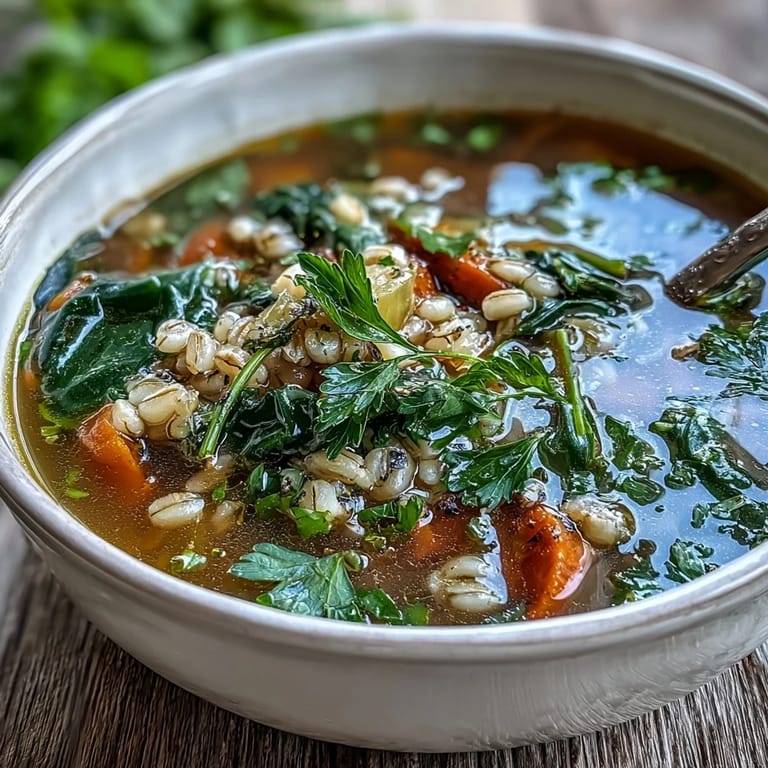
 One evening, my daughter came home from school asking why our kitchen smelled like spring when it was still cold outside, and I realized that good soup has this quiet magic—it makes people feel like things are going to be okay, like seasons are shifting, like there's warmth coming. That's what keeps me making this one, over and over.
The Beauty of Seasonal Flexibility
This soup doesn't demand perfection or specific vegetables—it's actually designed to celebrate what's available right now in your world. In early spring, I load it with tender greens and lean on the stored roots; by late spring, I might add fresh peas or asparagus and use less root vegetables. The barley stays constant, holding everything together like a reliable friend, and the broth is flexible enough to handle whatever vegetables show up. That's the real lesson here: soup isn't a rigid formula, it's an invitation to cook with what makes sense for this moment in time.
Why This Soup Actually Gets Better
If you're lucky enough to have leftovers, you'll notice the soup tastes different—richer, deeper, more intentional—after it's sat in the refrigerator for a day or two. The flavors have time to really talk to each other, the broth becomes more developed, and the barley absorbs even more of that savory goodness. I actually make extra on purpose now because I'd rather eat this soup on day three than on day one, and it also freezes beautifully for those moments when you need something wholesome but don't have the energy to cook.
Serving Suggestions and Variations
This soup pairs beautifully with crusty whole-grain bread for soaking up every last drop, but it also stands alone as a complete meal if you're looking for something substantial and straightforward. A squeeze of fresh lemon juice right before eating brightens everything up, and a tiny drizzle of good olive oil on top creates this luxurious moment that feels special without being complicated. Some people swear by grated Parmesan even though it's vegetarian, and others add white beans or chickpeas for extra protein and heartiness.
- Try swapping the rutabaga for sweet potato or regular potato if that's what you have on hand or prefer.
- A sprinkle of fresh dill or a few fresh mint leaves can add an unexpected brightness that changes the whole character of the soup.
- If you're making this for a crowd, you can actually double the recipe without worrying about it becoming difficult—soup scales beautifully.
 Pin it
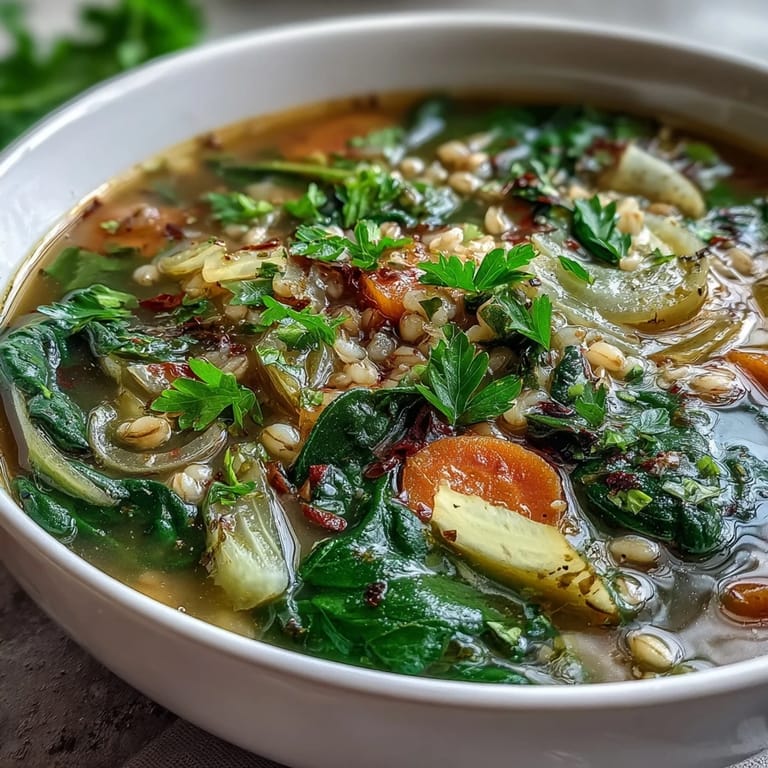
 There's something deeply satisfying about making a soup that nourishes both body and spirit, and this one does both with remarkable grace. Make it when the seasons feel uncertain, when you want to offer someone comfort, or simply when you need a reminder that good food doesn't have to be complicated to be meaningful.
Recipe FAQs
- → What vegetables are ideal for this dish?
A mix of winter and early spring vegetables such as leeks, carrots, parsnips, rutabaga, cabbage, and spinach provide balanced flavors and textures.
- → How does barley contribute to the dish?
Pearl barley adds a chewy texture and absorbs the broth's flavors, increasing the overall heartiness and nutritional value.
- → Can I substitute the rutabaga with other ingredients?
Yes, rutabaga can be replaced with potatoes or sweet potatoes to maintain the dish's comforting root-vegetable profile.
- → What herbs enhance the flavor here?
Dried thyme, marjoram, and bay leaf lend subtle earthy and aromatic notes that complement the vegetables and barley.
- → How should the greens be added to avoid overcooking?
Add cabbage and spinach toward the end of cooking and simmer uncovered just long enough to wilt them while preserving their vibrant color.
- → Is this dish suitable for a vegetarian diet?
Yes, by using vegetable broth and fresh plant-based ingredients, it fits well within vegetarian dietary preferences.