 Pin it
 The first time I picked up a butternut squash it rolled right off my counter and nearly crushed a toe. I was skeptical about mixing fruit with soup but the damp November air called for something unconventional. My kitchen smelled like a woodstove and orchard combined as the pot simmered. It turned out to be the quietest dinner we ever had because everyone was too busy scraping their bowls.
I once tried to shortcut this by not peeling the squash which resulted in a very textured mistake I do not recommend repeating. Now I find the rhythm of peeling and cubing almost meditative while listening to a podcast. There is a specific moment when the apple cider hits the hot vegetables and a sweet steam rises that makes the whole house feel warmer. It is my go to remedy for those grey rainy Tuesdays when the sun sets at four in the afternoon.
Ingredients
- Butternut squash: Choose one that feels heavy for its size to ensure it is packed with moisture and natural sugars.
- Apples: Using a tart variety like Granny Smith prevents the soup from becoming cloyingly sweet and adds a bright acidity.
- Onion: A slow sauté until they are translucent builds a savory foundation that balances the fruit.
- Garlic: Freshly minced cloves provide a subtle punch that keeps the earthy squash from feeling one dimensional.
- Vegetable broth: Use a low sodium version so you have total control over the final saltiness of the dish.
- Apple cider: This secret ingredient adds a depth of flavor that plain water or broth simply cannot match.
- Olive oil: A good quality oil helps carry the fat soluble flavors of the cinnamon and nutmeg throughout the liquid.
- Cinnamon and Nutmeg: These warm spices are the bridge that connects the squash to the apples.
- Salt and pepper: Season in layers to make sure every bite is perfectly balanced from the inside out.
Tired of Takeout? 🥡
Get 10 meals you can make faster than delivery arrives. Seriously.
One email. No spam. Unsubscribe anytime.
Instructions
- The Aromatic Start:
- Sauté the onion and garlic in olive oil until they are soft and smelling like a cozy bistro kitchen. Let the heat stay medium so nothing burns or turns bitter.
- Foundation Building:
- Toss in the squash and apples and let them cook just enough to catch a little golden color on the edges. This brief sear locks in the sweetness before the liquid goes in.
- Spice Infusion:
- Dust the mixture with cinnamon and nutmeg and stir well to make sure every cube is coated in warmth. You will smell the spices bloom almost instantly as they hit the hot oil.
- The Big Simmer:
- Pour in the broth and cider and let the pot bubble gently until the vegetables yield easily to a fork. This usually takes about 25 to 30 minutes of patient waiting.
- The Silky Transformation:
- Use an immersion blender to whirl everything into a velvet texture that looks like liquid gold. If you use a stand blender work in small batches to keep things safe.
- Final Touches:
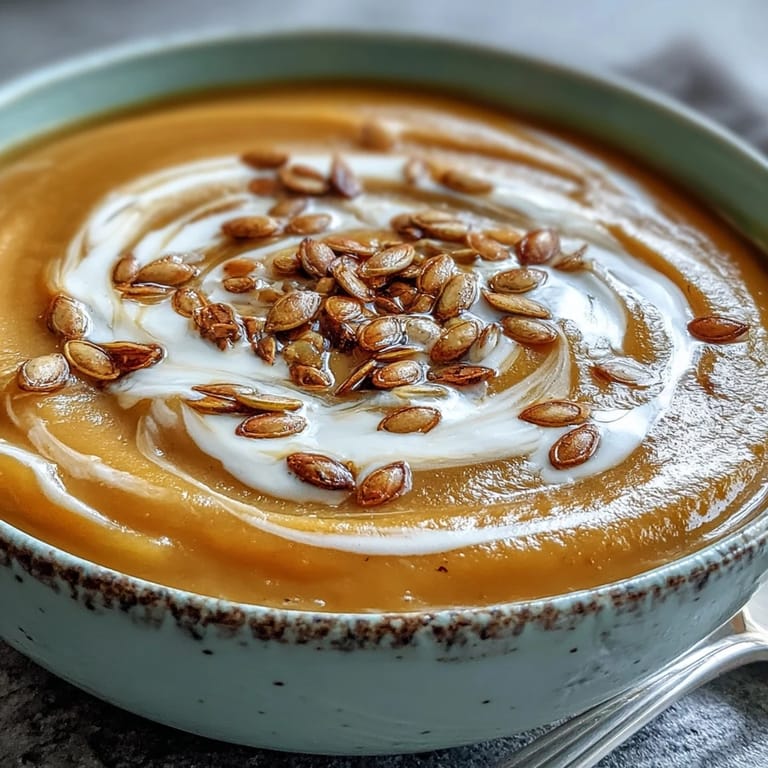
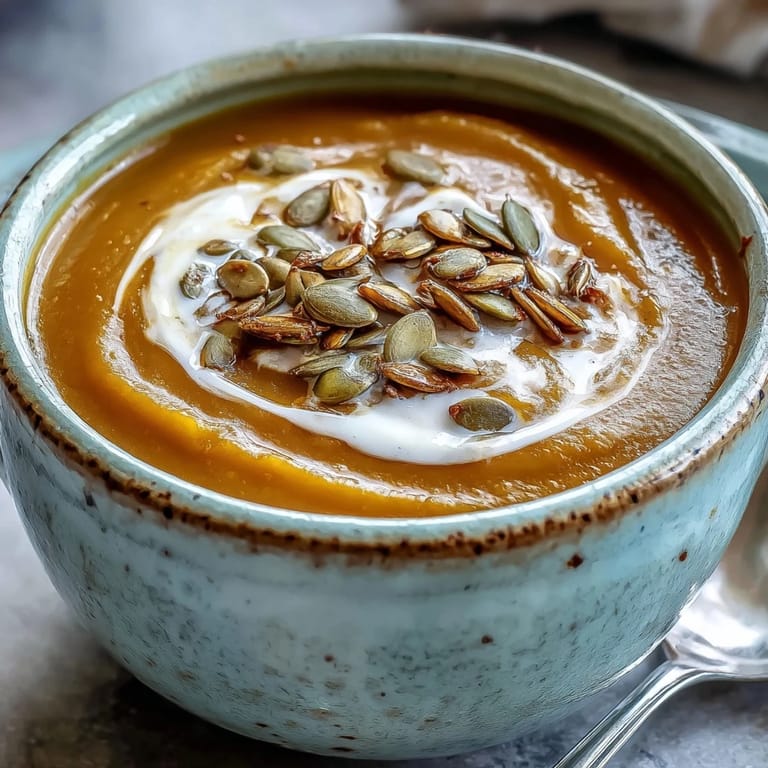
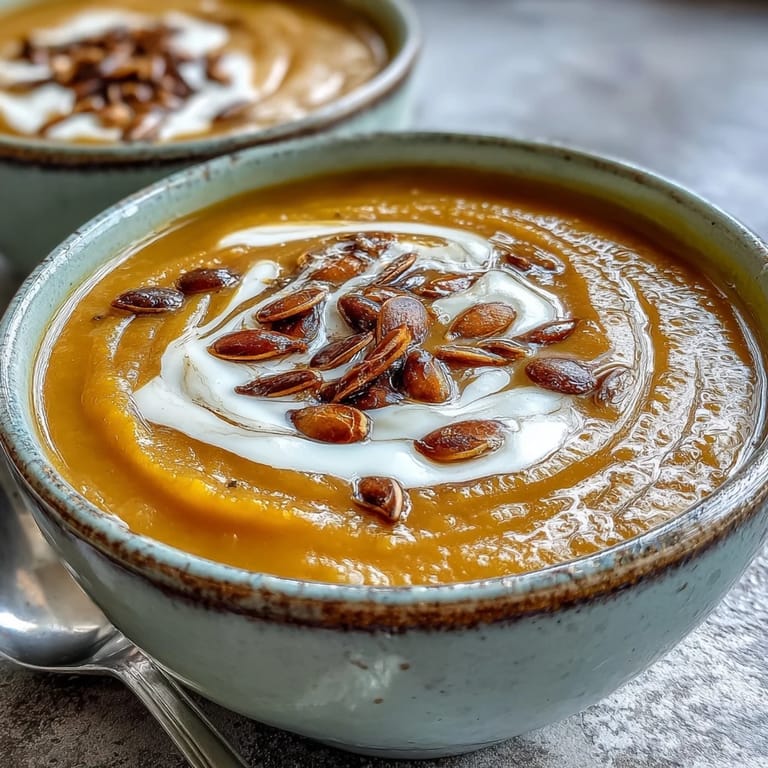
- Ladle the hot soup into bowls and add a swirl of cream to create beautiful snowy patterns on the surface. A few toasted pumpkin seeds on top add a satisfying crunch to every spoonful.
 Pin it
 Last Thanksgiving my niece insisted on helping by tossing in the pumpkin seeds one by one. She treated each seed like a tiny boat on a golden sea. We ended up with way too many garnishes but the soup had never tasted better. It reminded me that the best meals are usually the ones shared with a bit of chaos.
The Squash Struggle
I used to find peeling squash intimidating until I realized a sharp Y shaped peeler makes it as easy as peeling a carrot. If the skin is particularly tough you can microwave the whole squash for two minutes to soften the exterior slightly. This little trick saved my wrists and made the prep work feel like much less of a chore.
Apple Selection Matters
While I love a Honeycrisp for snacking I found that mixing one sweet and one tart apple creates the most complex flavor profile. The tartness cuts through the starchiness of the squash preventing the soup from feeling too heavy on the palate. It is a small adjustment that makes a massive difference in the final bowl.
Serving Suggestions and Sides
This soup loves a bit of crunch on the side to contrast with its creamy smooth texture. A crusty piece of sourdough or a handful of spiced nuts can turn this from a simple starter into a full meal.
- Try a drizzle of maple syrup if you want to lean into the autumnal sweetness.
- A pinch of cayenne pepper added at the end provides a surprising back of the throat heat.
- Always serve it piping hot because the flavors dull significantly as the soup cools down.
 Pin it
 This soup is a warm hug in a bowl that makes every autumn evening feel like a celebration. I hope it brings as much comfort to your table as it has to mine.
Recipe FAQs
- → What apples work best?
Granny Smith offers tart contrast while Honeycrisp provides sweetness. Both hold their shape during cooking and blend smoothly.
- → Can I freeze this?
Yes, freeze cooled portions in airtight containers for up to 3 months. Thaw overnight and reheat gently, adding splash of broth if needed.
- → How do I make it thicker?
Simmer uncovered longer to reduce liquid, or add a peeled potato during cooking. Blend extra thoroughly for creamiest texture.
- → What spices pair well?
Beyond cinnamon and nutmeg, try ginger, cardamom, or pinch of cayenne for warmth. Fresh sage or thyme adds herbal depth.
- → Can I use frozen squash?
Frozen cubed butternut works perfectly. No need to thaw—just add a few minutes to simmering time until tender.